The Lurid Sea
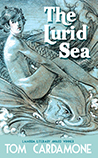 The erotic energy in my books is usually organic, unplanned and overflowing. Writing The Lurid Sea was different: I wanted to go to the extreme in exploring unfettered sexuality, to write a heroic tale where the action is sensual, depraved, triumphant. I wanted to tackle taboos and explore forgotten history: for centuries men on every continent have been seeking one another out in these hidden inverted steeples, bathhouses filled with steamy, underground grottos made for groping –yet these places have rarely served as the settings for our literary stories (though I added a postscript cataloging those gay books that I’m aware of which feature bathhouses).
The title is lifted from Edgar Allen Poe’s poem, The City in the Sea. This was a purposely macabre choice for an erotic novel. Every gay book written since the early 80s is about AIDS. Even if the plague is never addressed, it’s there. In the people that are missing and not present, in the arc of history, in the way we approach one another, the disease is omnipresent and it’s in The Lurid Sea as the main character’s incestuous brother. I mention this only because some of the initial reviewers either did not pick up on this or glossed over it in their reviews and so I feel compelled to clarify this point: the way we have sex is fundamentally changed and challenged and a book that celebrates, actually revels, in the act, must necessarily be over the top as a mere corrective.
Purchase The Lurid Sea
Reviews
Pacific Rimming
 Concerning my novella, Pacific Rimming: this is, in part, how I described it to publishers: “This is a novel of obsession. The story, told in the first person for immediacy, takes place in late nineties New York City. The protagonist is unnamed as obsession supplants identity. He's created a life of drug use and sexual conquest to avoid emotional intimacy, focusing exclusively on Asian men. This cycle nearly gets broken, but some barriers cannot be breached -to build a barrier often means something had to be displaced, not merely shielded, meaning this is not a novel of redemption. In terms of psycho-sexual-racial profiling, this phenomenon seems to be as ignored in gay literature as it is pervasive. We're all too obsessed with our own minority status to realize how efficiently we enshrine other types of bigotry. However this book is meant to reveal a psychology, not explain it or apologize for it.” Phew.
I think that a book without redemption is as important as those that come with moral parachutes at the end, or potentially more honest. I hope that's a good description; writing the pitch letter was more arduous than writing the story. It's like a one-way first date: nightmare city.
Written at the speed of summer in 2001, kicked out of the short-lived Project Queerlit, serialized in the now defunct Velvet Mafia, I wondered if Pacific Rimming would ever exist in book-form, so I am absolutely thrilled that Chelsea Station Editions has delivered my dark little baby back into the twilight. It has since slipped out of print, so maybe an anniversary reissue is in order some future decade?
Pacific Rimming Reviewed
Pacific Rimming Reviewed 2
Green Thumb
 Every writer has a drawer full of hopeful abortions, unfinished books, lapsed manuscripts, premature ideas. I've more than my share, though I've been lucky to see a few of these reach fruition.
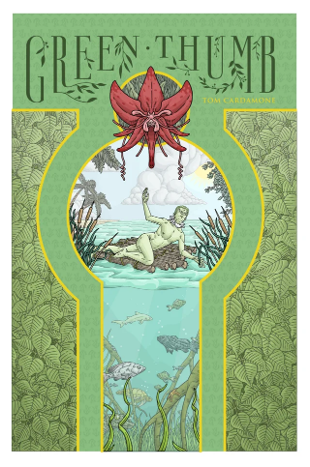
Green Thumb was nearly one such book. When I relocated from Manhattan to Brooklyn, I was excited and curious about how the move would renew not only my love for New York, but also my sense of exploration. It wasn't long before I realized that I was a quick bike ride away from Coney Island, and it was there, lying on a Hello Kitty beach towel, while editing The Lost Library, that Green Thumb was born. Born prematurely, that is. The heady first draft was very much a tribute to my youth, growing up in Florida. I was excited to explore this photosensitizing character, Leaf, and his island life among the remnants of a post-apocalyptic South, but I was having trouble moving past the organic first draft. Plus it was a short book, and I wasn't in the mood for unnecessary expansion just to fit the marketplace. A couple of years passed when I heard about BrazenHead, an imprint at Lethe, focused on novellas of queer speculative fiction. Ah, good fit, right? But I couldn't see my way through to the edits necessary to submit, so I took a risk (querying first, of course) and sent it in with a note that this was a very rough draft, that direction was a necessity, and crossed my fingers. And got lucky. The editor, Alex Jeffers, knew how to read a rough draft, to see it as a blue print, and with much midwifery, Green Thumb emerged into the sunlight (August 2012).
When it was announced that Green Thumb was a finalist for the Lammies, I was beside myself. After all, I had volunteered at the award ceremony just five or six years previously, with hardly a word of mine published, and had wondered then what it would be like to be nominated, much less win. When Green Thumb actually won the award I was literally thunderstruck, overawed, humbled. To paraphrase my remarks upon accepting, after thanking the publishers and editor, as well as Samuel R. Delany (for not being nominated):
I would like to say that we are all science fiction and fantasy authors. All of us were given a story of shame and isolation and we re-wrote it. We imagined better futures and made them happen. And maybe that is our destiny. Now that we have learned to advocate for ourselves, we must advocate for others.
The tenth anniversary of Green Thumb saw a beautiful reissue with a wonder new cover by the artist Michael Bukowski and a thoughtful introduction by gifted writer and friend Trebor Healey.
The New Weird: An Interview about Green Thumb
Green Thumb Reviewed
 In 2007 I published my novel, The Werewolves of Central Park. I've always said I wanted my tombstone bare, nothing but an ISBN number on it. Starbooks Press has fulfilled that dream in part, so thank you boys. Now Werewolves is wonderfully pornographic, a wildly erotic frolic through the Ramble, midnight Central Park. I once described it as "Ovid on acid" and I like that description. In this book I assigned creatures from Greek mythology to various stereotypes within New York City gay culture. It's a bit more of a confection than my other long work, and that was purposeful. After my previous book, Pacific Rimming, I really needed to tackle lighter fare. (One tiny part of this book was published in the anthology So Fey: Queer Faery Fiction. This was a wonderful piece of luck: the first time I've participated in a reading I tried out this segment -I was super nervous and half-tipsy AND ended up sharing the stage with Steve Berman, the editor of So Fey- who liked the piece enough to use it and has since published more of my work in Icarus: The Magazine of Gay Speculative Fiction, Wilde Stories, as well my short story collection, Pumpkin Teeth).